Benefits of Using Heat Pumps for Commercial Water Heating
Check the last six electricity bills for your facility.
Find the line items for water heating, whether that is a boiler, a geyser bank, or an immersion system running through the night to keep tanks topped up for morning demand. Add those numbers.
Now multiply by twelve.
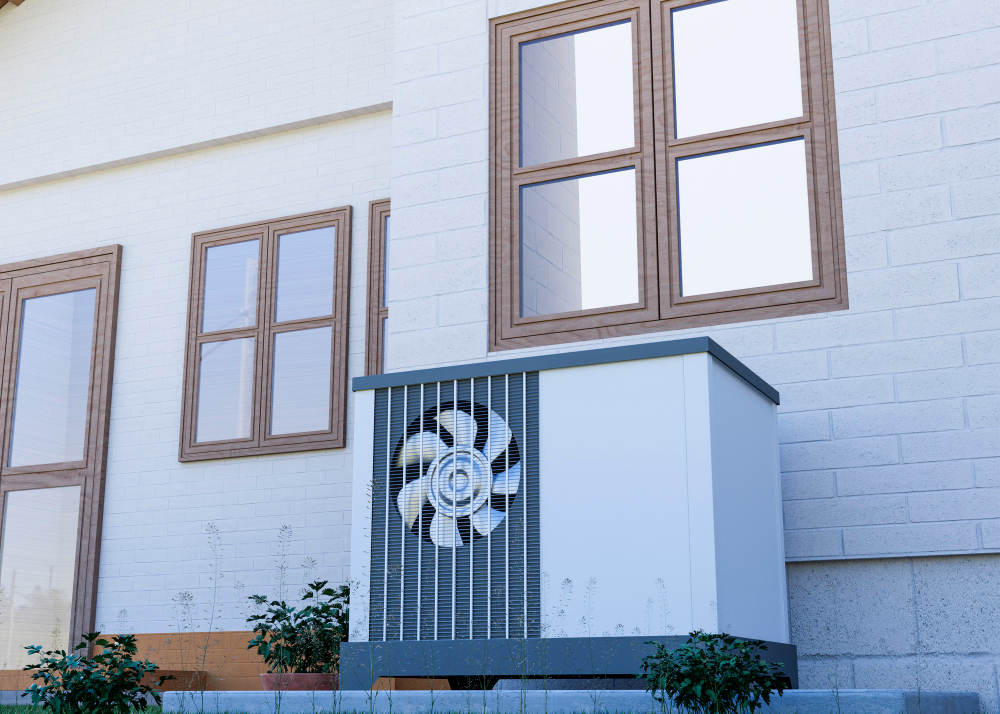
That annual figure is what your facility pays to do something the atmosphere does for free every single day. Air at 28°C contains thermal energy. A commercial heat pump for hot water extracts it, concentrates it, and delivers it to your storage tank at 55°C to 60°C using roughly one-third the electricity a resistance heater would consume for the same output.
The rest of this piece explains why that ratio exists, what it means operationally, and where the hidden advantages show up that most facility managers do not account for when they are comparing options.
The physics first, briefly
A heat pump does not generate heat. Wrong mental model, leads to wrong expectations.
It moves heat. From the air outside, into your water. The refrigerant cycle is the transport mechanism. Electricity powers the compressor that drives the cycle, not the heating itself.
This is why the COP, Coefficient of Performance, sits between 3.0 and 4.5 in Indian ambient conditions. One kilowatt-hour of electricity in. Three to four-and-a-half kilowatt-hours of heat energy delivered to the water. The ratio is not a marketing claim. It is thermodynamics.
Resistance-based systems, geysers, immersion rods, electric boilers, convert electricity to heat at COP 1.0. Always exactly 1.0. The laws of physics cap it there. A commercial heat pump for hot water runs at COP 3.5 because it is not converting electricity to heat. It is using electricity to move heat that already exists.
That distinction is the entire financial case.
What the savings actually look like on paper
A mid-size hotel in Aurangabad. 80 rooms. Daily hot water requirement of roughly 4,000 litres. Currently running on an electric geyser bank.
At Maharashtra commercial tariffs of Rs. 9 to Rs. 11 per unit and a resistance-based system consuming approximately 280 units daily, the monthly electricity cost for water heating alone runs between Rs. 75,000 and Rs. 92,000.
A well-specified commercial heat pump for hot water system handling the same 4,000-litre daily load consumes 70 to 80 units at COP 3.5. Monthly electricity cost: Rs. 19,000 to Rs. 26,000.
The difference is Rs. 50,000 to Rs. 65,000 per month. Every month. Without changing anything else about how the hotel operates.
On a system that costs Rs. 8 to Rs. 12 lakh installed, the payback period sits between 14 and 22 months in this scenario. After that, the savings are straight operational benefit for the remaining 13 to 16 years of equipment life.
The benefits beyond the electricity bill
Consistency that geyser banks cannot match
A bank of electric geysers runs on a first-in, first-hot basis. The first tank heats quickly. The sixth tank, if demand hits before recovery is complete, delivers lukewarm water. Anyone who has managed a 3-star hotel during checkout hour knows this problem intimately.
Heat pump systems charge large insulated storage tanks continuously through the night and early morning. By 6 AM the full tank volume is at temperature. Demand can draw from it steadily without recovery gaps.
No complaints from room 47 about cold showers at 8 AM. That is a guest satisfaction metric with a real value attached.
Compliance and audit readiness
BEE star ratings, green building certifications under IGBC, and increasingly the ESG reporting requirements of institutional investors and global hotel chains all look at energy consumption per unit of output. Kilowatt-hours per occupied room per night is a tracked metric in hospitality. Per kilogram of product in food processing.
A commercial heat pump for hot water installation reduces that denominator materially. The generation and consumption data from the system's monitoring interface is third-party verifiable, which matters when the audit is not internal.
Reduced maintenance surface
A diesel boiler has a combustion chamber, a burner assembly, a flue, a pressure vessel, and a water treatment requirement for the boiler feed. Each of those is a maintenance item, a compliance inspection point, and a potential failure mode.
A heat pump has a compressor, a refrigerant circuit, and a storage tank. Annual service. Filter cleaning. Refrigerant pressure check every two to three years.
The maintenance schedule is shorter. The specialist labour requirement is lower. The unplanned downtime risk is smaller.
For facilities in locations where boiler technicians are not easily available, this is not a minor consideration.
Lower ambient heat contribution
An electric geyser bank in a plant room dumps waste heat into the surrounding space. In a hotel basement or a food processing facility, that contributes to cooling load during summer months, which shows up as additional air conditioning electricity consumption.
Heat pumps extract heat from outside air and deposit it into water. The plant room stays cooler. The air conditioning runs less. It is a secondary saving that rarely appears in the initial proposal but shows up in the electricity bills.
What the Indian incentive structure adds to the case
Accelerated depreciation at 40 percent in the first year applies to heat pump installations classified under renewable energy and energy efficiency equipment under Section 32 of the Income Tax Act. For a profitable commercial entity with Rs. 10 lakh of capital deployed in the system, that is Rs. 4 lakh of depreciation in year one, reducing taxable income and improving effective project return.
Priority sector lending classifications under RBI guidelines make financing available at rates below standard commercial loan terms for energy efficiency investments including heat pumps. Several public sector banks and NBFCs actively finance these projects under this classification.
State-level schemes vary. Maharashtra's MEDA has run capital subsidy programmes for energy-efficient water heating in commercial establishments. The active scheme and current subsidy quantum need direct verification before the purchase order is raised, since these change with annual policy cycles.
Where installations go wrong, honestly
Three patterns show up repeatedly in underperforming commercial heat pump installations across India.
Undersizing relative to peak demand, not daily average demand, is the most common. A facility consuming 3,000 litres between 6 and 9 AM needs a system sized for that three-hour window, not the 24-hour total divided by 24. Miss this and the backup heating element runs more than it should, eroding the savings calculation.
Hard water scaling. Maharashtra, Gujarat, and Rajasthan have districts with municipal supply running above 400 ppm TDS. Without anti-scaling treatment in the water circuit, heat exchanger surfaces accumulate deposits that degrade COP over 18 to 24 months. The system still works. It just works worse than it should, quietly, until someone runs the numbers and notices the savings have shrunk.
Placement without acoustic consideration. Compressor units generate noise in the 55 to 65 dB range. In a hotel, placing the outdoor unit under a guest room window is an installation decision that generates review responses. It is avoidable with a five-minute conversation during site planning.
Powertroniks Solar: how the assessment actually works
Powertroniks Solar has been designing and installing thermal energy systems across Maharashtra since 2010. Commercial heat pump projects start with a load profiling exercise, not a capacity recommendation from a catalogue.
Peak demand windows are documented. Current energy spend is audited against actual bills. Water quality is checked for TDS before specifying anti-scaling requirements. Site layout is reviewed for compressor placement before anything is ordered.
The proposal includes payback period calculated on the facility's real tariff, applicable accelerated depreciation benefit calculated on the entity's tax position, and current state scheme subsidy confirmed, not assumed.
Installation, commissioning, DISCOM documentation where applicable, and annual maintenance contracts are all handled in-house. One point of contact for the life of the system.
The number worth calculating today
Take your last electricity bill. Identify the water heating consumption if it is metered separately, or estimate it from geyser running hours if it is not. Multiply by 12.
That annual number, reduced by 60 to 65 percent, is the approximate annual saving a properly specified commercial heat pump for hot water delivers at your facility.
Contact Powertroniks Solar for a free facility assessment. Bring three months of electricity bills and a rough floor plan. The proposal that comes back has your numbers on it, not industry averages.
The saving is already there. It is just currently going to the electricity board instead of staying in your accounts.