Key Advantages of Installing a Grid-Tied Solar System
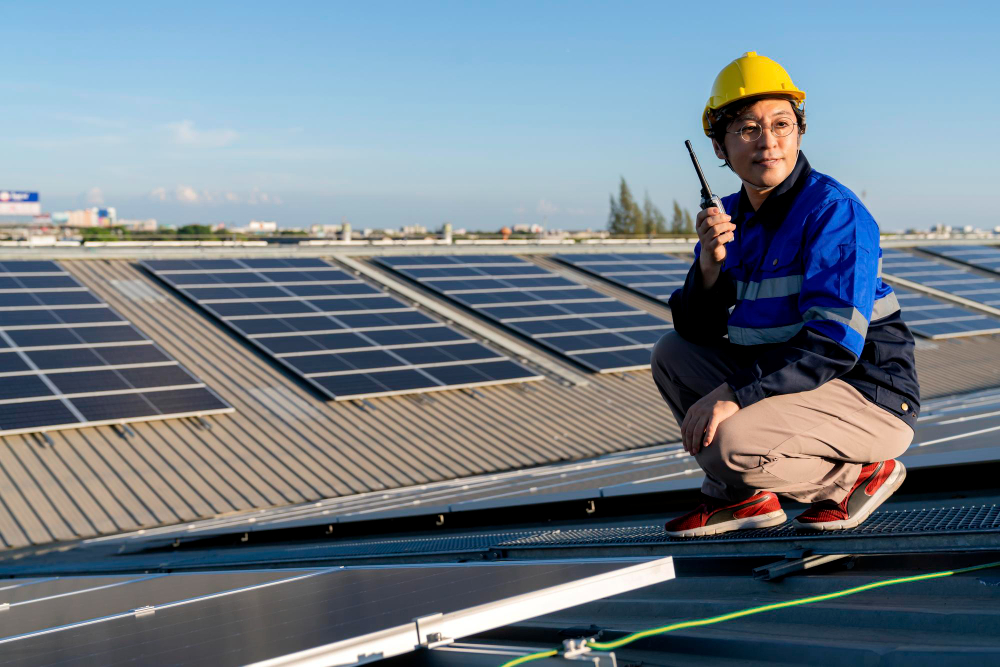
A factory owner in Nashik installed rooftop solar two years ago. 10 kW system. Paid Rs. 4.5 lakh. His electricity bill dropped by Rs. 800 a month.
His neighbour installed 10 kW of grid-tied solar six months later. Bill dropped by Rs. 6,200 a month.
Same city. Same sunlight. Same roof size. Different system type.
The difference between an off-grid setup and a properly designed grid-connected one is not a minor technical detail. It is the entire financial outcome of the project. And yet most first-time solar buyers in India do not understand what they are choosing between until after the installation is done.
The advantages of grid connected solar over standalone alternatives are real, measurable, and worth understanding before you sign anything.
What grid-tied actually means in practice
Your solar panels generate DC electricity. An inverter converts it to AC. That power runs your home or facility first. Whatever your panels produce beyond your immediate consumption does not get wasted. It flows into the DISCOM grid.
Your electricity meter runs backwards.
At the end of the billing cycle, you pay only for the net units you drew from the grid after your solar exports are credited. This is called net metering. It is the mechanism that makes grid-tied solar financially attractive in a way that battery-based off-grid systems simply cannot match at current battery costs.
No batteries. No fuel. No storage losses. Just direct consumption plus credited export.
The financial case, without the marketing language
Let us be specific.
A 5 kW grid-tied system in Maharashtra generating 600 units per month at current MSEDCL residential tariffs of Rs. 8 to Rs. 9 per unit saves between Rs. 4,800 and Rs. 5,400 per month. That is Rs. 57,000 to Rs. 64,800 per year, from a system that costs Rs. 2.5 to Rs. 3 lakh installed after MNRE subsidy.
Payback period: 4 to 5 years. System life: 25 years minimum for quality panels.
The 20 years after payback produce electricity at essentially zero marginal cost. That is the advantages of grid connected solar distilled into one number.
The actual advantages, broken down without fluff
No battery cost or replacement cycle
Off-grid systems need battery banks. Lead-acid batteries need replacement every 4 to 5 years. Lithium-ion every 8 to 10 years. Both cost money, require maintenance, and introduce failure points.
Grid-tied systems use the DISCOM network as a virtual battery. Export when you generate more than you consume. Import when you need more than you generate. The grid absorbs the fluctuation. You avoid the capital cost and the maintenance cycle entirely.
Net metering turns your roof into a revenue asset
Every unit you export earns a credit. Every unit you import is debited. The net difference is what you pay.
For commercial and industrial consumers with daytime loads below their system generation capacity, this structure is particularly powerful:
- Export surplus during peak generation hours (10 AM to 3 PM)
- Draw from the grid in evenings at credited rates
- End-of-month bill reflects only the genuine net consumption
Some Maharashtra MSEDCL consumers with well-sized systems reach near-zero billing months during April and May.
Lower upfront investment than off-grid
No batteries means the system cost is purely panels, inverter, mounting, and installation. For equivalent generation capacity, a grid-tied system costs 30 to 40 percent less than an off-grid system with adequate battery backup.
That lower entry cost improves payback period and makes solar accessible to a broader range of homeowners and businesses than battery-dependent configurations.
Reliability backed by two sources
Off-grid means you live and die by your battery state and the previous day's sunlight. Grid-tied means you have uninterrupted supply regardless. Your panels cover what they can. The grid covers the rest. There is no scenario where you run out of power.
For commercial facilities where downtime has a direct cost, that reliability is not a minor benefit.
Property value that compounds over time
A grid-tied solar system is an asset on the property, not just an energy saving measure. Real estate agents in Mumbai, Pune, and Bengaluru increasingly report that solar-installed properties command a premium, particularly among buyers who understand the long-term electricity cost trajectory in India.
It does not show up on an invoice. It shows up when you sell.
Who benefits most from grid-tied solar in India right now
The advantages of grid connected solar apply broadly, but certain profiles get the most from the investment:
- Homeowners with monthly electricity bills above Rs. 3,000 who own their property or have roof rights
- Commercial establishments consuming 500 units or more per month with daytime operational hours
- Industrial units with high daytime load profiles in states with favourable net metering policies
- Anyone currently building or renovating where system integration is simpler and cheaper
Apartment residents with individual roof access, independent floors, and housing societies managing common area power are also strong candidates. The society-level installations have become notably more common in Maharashtra since 2022.
The policy environment makes 2025 a good year to move
MNRE's PM Surya Ghar scheme currently offers subsidies of Rs. 30,000 for 1 kW, Rs. 60,000 for 2 kW, and Rs. 78,000 for 3 kW and above for residential rooftop installations. These numbers have been revised upward from previous scheme iterations.
Net metering regulations are active across all major states. Maharashtra, Gujarat, Karnataka, Tamil Nadu, and Rajasthan all have functional DISCOM approval processes for grid interconnection.
The advantages of grid connected solar have not changed. What has changed is the policy support structure around them, which makes the financial case stronger today than it was three years ago.
Where most installations quietly go wrong
Grid-tied solar is straightforward technology. The failures are almost always in execution.
Roof orientation matters more than most buyers realise. A south-facing 30-degree pitch in Maharashtra generates roughly 18 to 20 percent more annually than an east-west flat installation of identical capacity. Shading from water tanks, parapet walls, or adjacent buildings cuts generation disproportionately because most inverter configurations are affected by the weakest panel in a string.
Inverter sizing relative to panel capacity affects how much generation gets captured during shoulder hours - early morning and late afternoon when the sun is lower. An undersized inverter clips generation at peak times. An oversized one costs money that does not translate to output.
These are not warnings against going solar. They are arguments for working with someone who knows what they are doing.
Powertroniks Solar: from assessment to DISCOM approval
Powertroniks Solar has been designing and installing grid-tied solar systems across Maharashtra since 2010. Residential, commercial, and industrial. The process starts with a site assessment that documents roof area, orientation, shading analysis, and current consumption profile before any system size is recommended.
DISCOM approval, net metering application, and commissioning inspection are handled in-house. For most homeowners, this is the part of the process that feels opaque and time-consuming. Powertroniks has run this process across enough MSEDCL jurisdictions that the documentation is routine for their team even when it is not for the customer.
Post-installation, generation monitoring and annual performance checks come as standard. If output drops below expected levels, the fault-finding starts before the customer has to ask.
The decision that compounds for 25 years
Every month you delay a grid-tied installation is another month of full electricity bills. Tariffs in India have risen 6 to 8 percent annually on average over the past decade. That trend has no reason to reverse.
Contact Powertroniks Solar for a free rooftop assessment and system proposal. The proposal includes system size, expected generation, MNRE subsidy applicable, net metering savings projection, and payback period - calculated on your actual bill, not an industry average.
The grid is not going anywhere. You might as well use it in your favour.